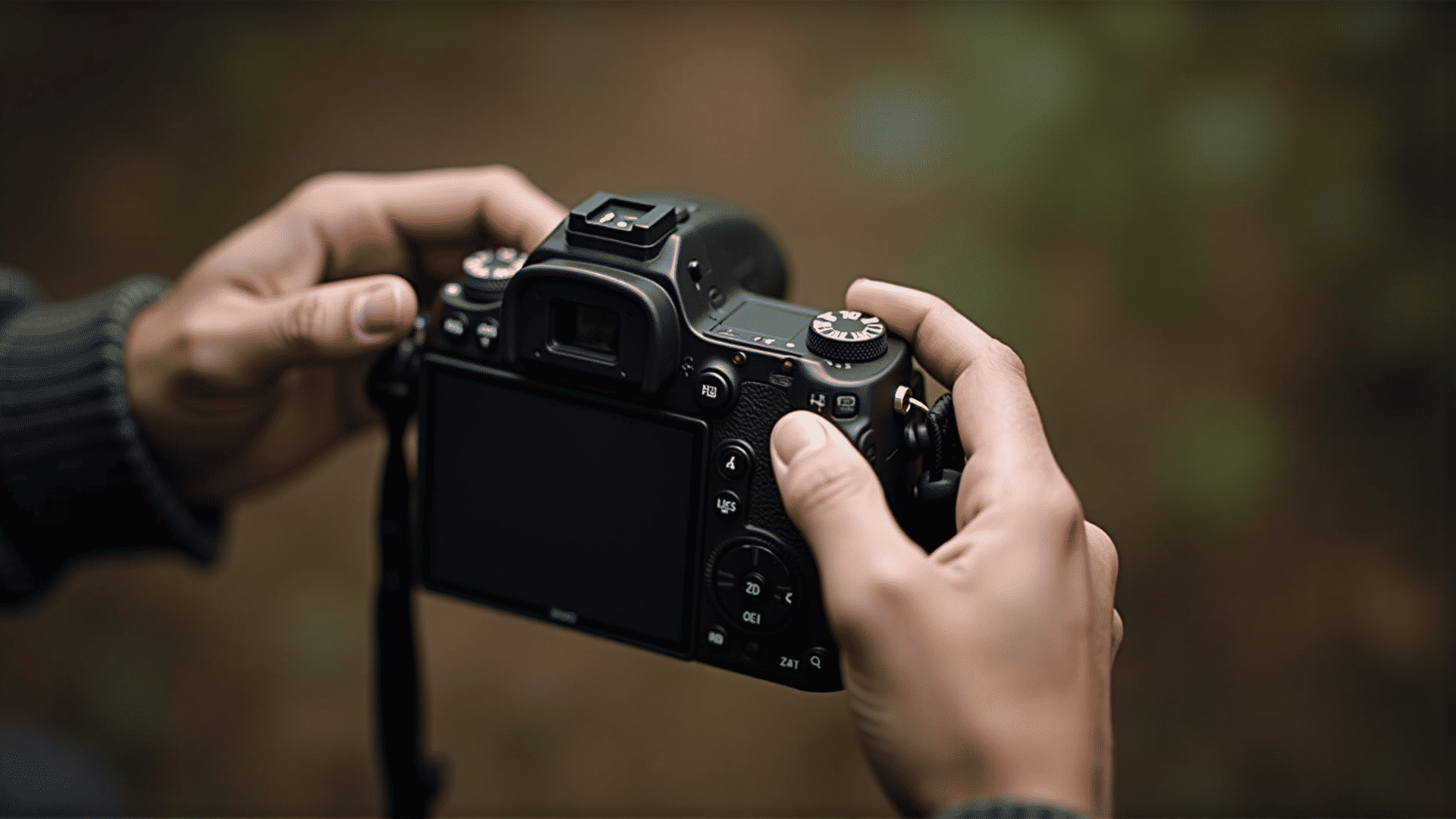
Exploring the intricacies of specific settings can take your capturing of moments to a whole new level. By gaining a deeper understanding of these settings, you can ensure your work aligns with your creative vision under various conditions.
At the core of controlling light exposure in digital imaging is the trio of aperture, shutter speed, and ISO, often referred to as the "exposure triangle." Each of these elements influences the outcome in a unique way:
-
Aperture: This is essentially the "eye" of the device. It controls how much light enters the sensor. A smaller f-number (like f/1.8) indicates a larger opening, allowing more light, which is suitable for low-light conditions and achieving a blurred background effect. Conversely, a larger f-number (like f/16) reduces the opening, enhancing focus across the frame, ideal for landscapes.
-
Shutter Speed: This setting determines how long the sensor is exposed to light. A fast shutter speed (like 1/1000s) freezes action, great for sports or wildlife. A slower speed (like 1/10s) allows for motion effects, such as the silky appearance of flowing water in a landscape scene.
-
ISO: This measures the sensitivity of the sensor to light. A lower ISO value (like ISO 100) is ideal for bright conditions, ensuring clear, smooth images. Higher ISO values (such as ISO 3200) increase sensitivity, useful for darker environments but could introduce noise.
Balancing these three elements is key to achieving desired exposure and creative effects. It's essential to practice adjusting them according to different scenarios to see how each impacts the final image.
Additionally, understanding the focus modes can immensely impact the quality. Whether it's single point for a non-moving subject or continuous focus for a dynamic environment, choosing the right mode aids in maintaining sharpness.
Exploring white balance settings can correct color casts from different light sources (like fluorescent or tungsten lights), ensuring that colors appear natural. Learning to manually adjust white balance can be crucial for precise control over your work.
Finally, the file format in which you save your work can also make a significant difference. While JPEGs are space-efficient, using RAW format preserves all data captured, which allows for extensive post-processing flexibility.
By experimenting with these essential settings and consistently practicing, you'll develop the skill to anticipate and adapt to varying scenarios, ultimately leading to stunning, memorable captures.